Course ID: EE4108
Course Credits: 4
Course Type:
Pre-requisites: None
Course ID: EE4108
Course Credits: 4
Course Type:
Pre-requisites: None
Course structure & AssessmentsVIEW COURSE VIDEOS
For details of standard course structure and assessments, visit Academics page.
| Module 1 | In this module, the students will learn about the importance of hardware testing and the career paths in the domain of testing. Homework/exercises will include objective-type questions to assess their understanding of concepts. 1) Why Testing? – Importance of electronic testing in manufacturing and design 2) Types of Testing – Validation, characterization, debugging, production testing, reliability testing 3) Basic Testing Concepts – Fault models, defect vs. fault, test coverage 4) Measurement Fundamentals – Accuracy, precision, error sources, calibration |
| Module 2 | This module will consider fault models for digital circuit testing. Homework/exercises will be include paper-and-pencil exercises as well as exercises based on web-based tools. 1) Testing Digital Circuits – Stuck-at faults, transition faults 2) Combinational vs. Sequential Testing – Challenges in sequential circuits 3) Scan Chains & Built-In Self-Test (BIST) – Concept, examples 4) Fault Simulation & ATPG – Introduction to test generation 5) Built-in Self Test 6) Automated Digital Testing (ATE) – How large-scale testing works |
| Module 3 | Electronic test engineers must be comofortable in the use of a variety of lab instruments. In this module, we will provide an overview of different measuring instruments typically used in testing. Free web-based tools will be used for demonstration and for exercises. Homework/exercises will include the use of tools. 1) Multimeters and Oscilloscopes – Basic functions, usage, pros/cons 2) Signal Generators & Spectrum Analyzers – Use in frequency-domain analysis 3) Logic Analyzers & Protocol Analyzers – Debugging digital circuits 4) Power Supplies & Load Testers – Power integrity testing 5) Testing in Time vs. Frequency Domain – FFT analysis 6) Noise and Interference in Measurements – Common mistakes in testing |
| Module 4 | This module will consider the testing of analog circuits. 1) Challenges in Analog Testing – Why analog is harder than digital 2) DC and AC Testing of Analog Circuits – Gain, bandwidth, linearity 3) Distortion and Noise Measurement – THD, SNR, dynamic range 4) ADC/DAC Testing – Linearity, monotonicity, DNL, INL 5) Testing RF & Communication Circuits – Key parameters 6) Automated Analog & Mixed-Signal Testing – Basics |
| Module 5 | This module will deal with testing of PROMs and RAMs. 1) Functional fault models for memory testing 2) Functional patterns for testing memories 3) Built-in Self-Test architecture for memories 4) Built-in Self-Repair |
| Module 6 | In this module, we will cover PCB testing and in-system testing and debugging of electronic hardware. 1) Common PCB Faults – Open circuits, short circuits, cold solder joints 2) Manual Debugging Techniques – Using a multimeter, continuity testing 3) Automated Optical Inspection (AOI) & X-ray Inspection – Basics 4) Boundary Scan (JTAG) Testing – Concept and simple example 5) EMI/EMC Testing Basics – Why compliance is necessary |
| Module 7 | 1) IC Manufacturing & Testing Flow – Wafer probing, package testing 2) Parametric Testing – IDDQ, leakage current, threshold voltage 3) Functional Testing of ICs – Typical methodologies 4) Burn-in Testing & Reliability – Why long-term reliability tests matter |
| Module 8 | 1) Concept of Automated Test Equipment (ATE) – Role in IC and PCB testing 2) Concept of diagnostic testing 3) Data-Driven Testing – Using machine learning for fault detection 4) Test Cost vs. Test Quality – Optimizing test efficiency 5) Data Analysis in Testing – Using Data Science for test data analysis 6) Lab Automation & Scripting – Automating measurements using Python |
About the Instructors
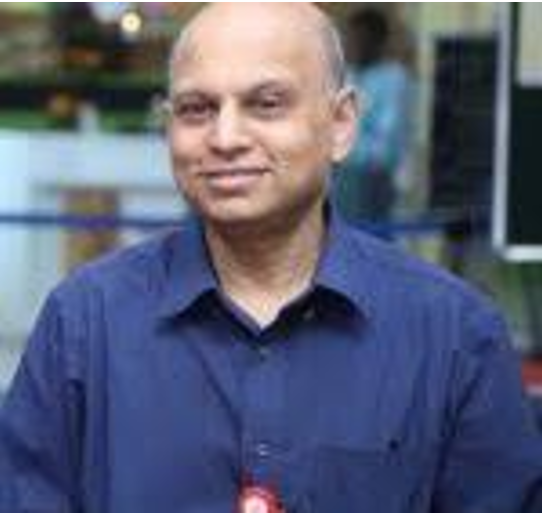
C.P. Ravikumar is the Director of Technical Talent Development at TI, India. He joined Texas Instruments (India) in 2001 and has played several roles at TI, including Senior Technologist (VLSI-Test) and Director of University Relations. He was a Professor of Electrical Engineering at IIT Delhi (1991-2001). He has held a visiting position in the
Department of EE-Systems at University of Southern California (1995-1996) and spent a year with ControlNet India (2000-2001) as Vice President (Training).
Ravikumar obtained a Ph.D. in Computer Engineering from the Department of EE-Systems at University of Southern California (1991). He obtained an M.E. in Computer
Science from Indian Institute of Science (1987) and a B.E. in Electronics from Bangalore University (U.V.C.E.,1983). He has published over 250 research papers
in the areas of VLSI physical design, VLSI test, parallel processing, electronic design automation and embedded systems in peer-reviewed journals and conferences. He has won three best paper awards in international conferences of the IEEE. He is the author/coauthor/editor of 15 books in the areas of VLSI design and Embedded Systems. He is a senior member of IEEE. He founded the IEEE CAS Bangalore Chapter and has served as its honorary secretary. He has served as the honorary secretary of VLSI Society of India for 8 years. He established the VLSI Design Test and Sympoisum (VDAT) in India and was the general chair of this event for 15 years. He has served on the committees of numerous conferences in various capacities such as Program Chair and General Chair. He has served on the editorial committees of several journals, including Journal of Electronic Testing – Theory and Applications (Springer) and Journal of Low Power Electronics (ASP). He has received an award from Zinnov foundation and a recognition from IESA for his work with Indian universities. He received the “Best Blogger” award from TI University Program (2014).