Qualifier Applications open for May 2026 term , Last date to Apply : June 4, 2026

Qualifier Applications open for May 2026 term , Last date to Apply : June 4, 2026

Diploma Level

Digital Signal Processing

The objective of this course is to introduce the student to the fundamental principles and applications of Digital Signal Processing. This course will cover the basics of discrete-time signals and systems, Transform domain techniques (Fourier Transform and z-transform), sampling, DFT/FFT and diverse applications. The design of Finite Impulse Response filters will be introduced. MATLAB will be utilized to demonstrate and implement different DSP techniques.

by Dr. R. David Koilpillai

Course ID: EE3101

Course Credits: 4

Course Type: Diploma

Pre-requisites: EE2101 -  Signals and Systems

What you’ll learnVIEW COURSE VIDEOS

Work with all types of discrete time signals and apply DSP techniques on them
Use time and frequency domain methods to analyze discrete time signals and systems.
Understand the process of sampling and reconstruction.
Design digital filters for different applications.

Course structure & Assessments

5 credit course, weekly online assignments, 2 in-person invigilated quizzes, 1 in-person invigilated end term exam. For details of standard course structure and assessments, visit Academics page.

Week 1 – 2 Review of Signals and Systems: Discrete time complex exponentials and other basic signals—scaling of the independent axis and differences from its continuous-time counterpart—system properties (linearity, time-invariance, memory, causality, BIBO stability)—LTI systems described by linear constant coefficient difference equations (LCCDE)—impulse response and convolution
Week 3 – 4 Sampling: Impulse train sampling—relationship between impulse trained sampled continuous-time signal spectrum and the DTFT of its discrete-time counterpart—scaling of the frequency axis—relationship between true frequency and digital frequency—reconstruction through sinc interpolation—aliasing—effect of sampling at a discontinuous point—relationship between analog and digital sinc—effects of oversampling—discrete-time processing of continuous-time signals
Week 5 – 6 Discrete-Time Fourier Transform (DTFT): Complex exponentials as eigensignals of LTI systems—DTFT definition—inversion formula—properties—relationship to continuous-time Fourier series (CTFS)
Week 7 – 8 Z-Transform: Generalized complex exponentials as eigensignals of LTI systems—z-transform definition—region of convergence (RoC)—properties of RoC—properties of the z-transform—inverse z-transform methods (partial fraction expansion, power series method, contour integral approach)—pole-zero plots—time-domain responses of simple pole-zero plots—RoC implications of causality and stability
Week 9 - 10 Frequency Domain Analysis of LTI Systems: Frequency response of systems with rational transfer function—definitions of magnitude and phase response—geometric method of frequency response evaluation from pole-zero plot—frequency response of single complex zero/pole—frequency response of simple configurations (second order resonator, notch filter, averaging filter, comb filter, allpass systems)—phase response—definition of principal phase—zero-phase response—group delay—phase response of single complex zero/pole—extension to higher order systems—effect of a unit circle zero on the phase response—zero-phase response representation of systems with rational transfer function—minimum phase and allpass systems—constant group delay and its consequences—generalized linear phase—conditions that have to be met for a filter to have generalized linear phase—four types of linear phase FIR filters—on the zero locations of a linear phase FIR filter—constrained zeros at z = 1 and at z = -1 and their implications on choice of filters Type I through Type IV when designing filters—frequency response expressions for Type I through Type IV filters
Week 11 – 12 Discrete Fourier Transform (DFT): Definition of the DFT and inverse DFT—relationship to discrete-time Fourier series—matrix representation—DFT as the samples of the DTFT and the implied periodicity of the time-domain signal—recovering the DTFT from the DFT—circular shift of signal and the "index mod N" concept—properties of the DFT—circular convolution and its relationship with linear convolution—effect of zero padding—introduction to the Fast Fourier Transform (FFT) algorithm—decimation-in-time and decimation-in-frequency algorithms.
+ Show all weeks

Prescribed Books

The following are the suggested books for the course:

Discrete-Time Signal Processing by Alan V. Oppenheim and Ronald W. Schafer, 3rd edition, 2010, Prentice Hall, Upper Saddle River, NJ.

Digital Signal Processing by Tarun K Rawat, 2nd Edition, 2015, Oxford University Press.

Digital Signal Processing by John G. Proakis and Dimitris K. Manolakis, 4th edition, 2007, Prentice Hall, Upper Saddle River, NJ.

Digital Signal Processing by Sanjit Mitra, 4th edition, 2011, McGraw-Hill, New York, NY.

About the Instructors

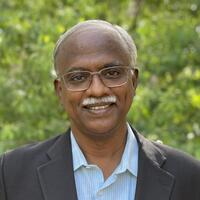
Dr. R. David Koilpillai
Professor, Department Of Electrical Engineering, IIT Madras

Dr. R. David Koilpillai received B.Tech degree from IIT Madras and MS and PhD degrees (in Electrical Engineering) from California Institute of Technology, Pasadena, USA.

...  more

Prof. David has over three decades of experience in the field of wireless and cellular technologies. In June 2002, Prof. David joined IIT Madras and is currently the Qualcomm Institute Chair Professor in Electrical Engineering. He served as Dean (Planning) during 2011-2017, handling the portfolios of infrastructure, finance, and strategic planning. During the period April 2008–December 2009, he served as the Co-Chair of the IITM special task force for setting up the new IIT at Hyderabad. Dr. David also served as Head, Central Electronics Centre of IITM, during 2001–11. Dr. David’s technical areas of expertise include cellular and broadband wireless systems and DSP techniques for wireless communications. He is the faculty coordinator of the IITMSAT Student Satellite initiative. During January–July 2007, Prof. David was on sabbatical from IITM and served as the Chief Scientist, Centre of Excellence in Wireless Technology (CEWiT), a public-private R&D initiative of the Govt. of India, and was responsible for launching the national project, the Broadband Wireless Consortium of India (BWCI). Prior to joining IITM, Prof. David was at Ericsson USA for twelve years, where he held different technical and managerial positions. In 2000, he became the Director of Ericsson’s Advanced Technologies and Research Department at RTP, North Carolina. At IITM, Prof. David has established an active research and teaching program in Wireless Communications and Digital Signal Processing.

  less

Other courses by the same instructor: - Humanities Elective , - Humanities Elective , - Humanities Elective , - Humanities Elective , - Humanities Elective , - Humanities Elective , - Humanities Elective , - Humanities Elective , - Humanities Elective and - Humanities Elective